Thursday, July 09, 2009
Saturday, July 04, 2009
Happy 4th of July! ~ Let's Celebrate!

"memories, memories, memories..."
~ a friend
Created from my my original photo and a little imagination using picnik.
Saturday, June 20, 2009
Friday, June 19, 2009
Sunday, May 10, 2009
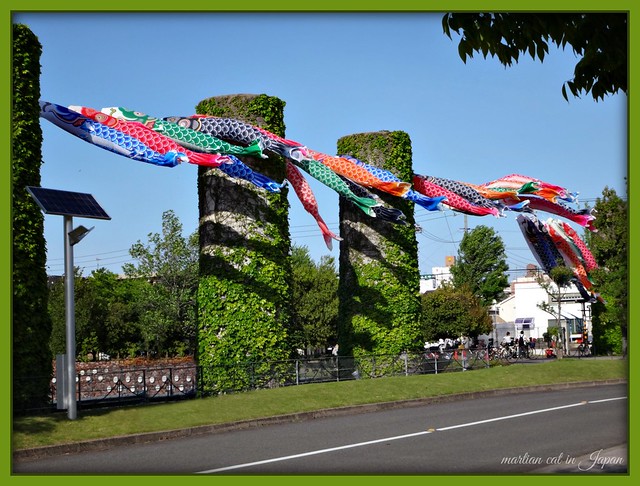
Kodomo no Hi (Children's Day in Japan)

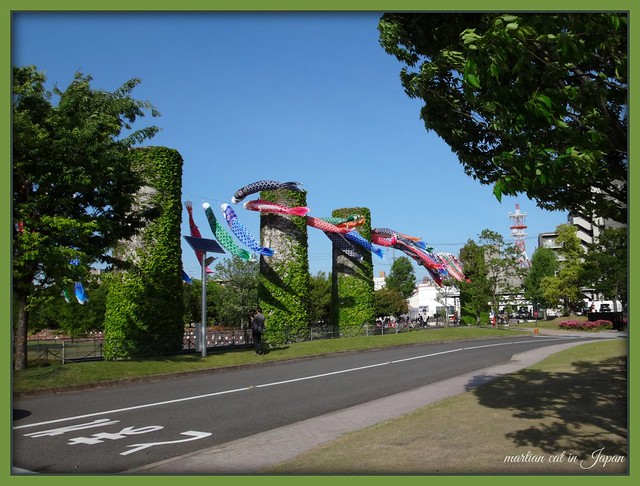
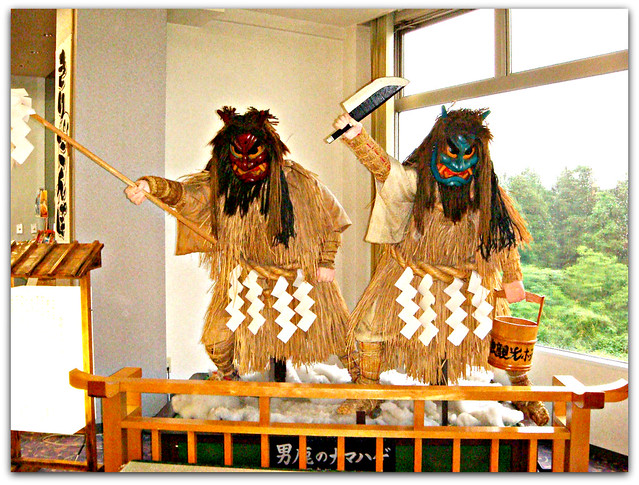
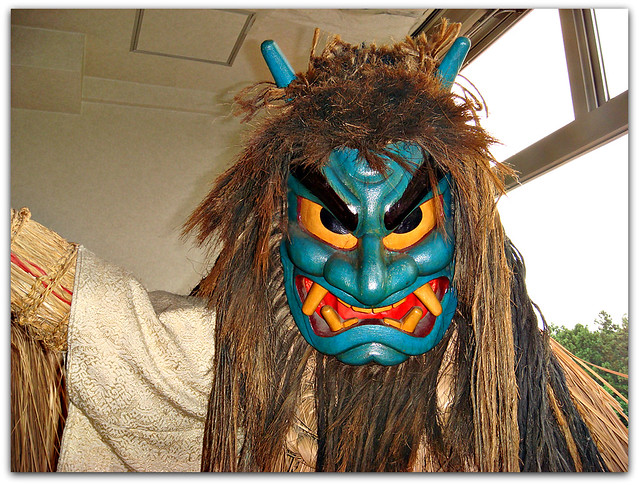
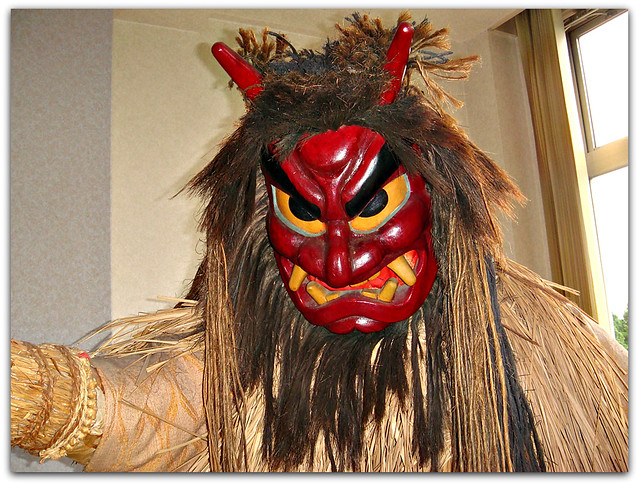
This is a decoration for Kodomo no Hi (こどもの日 in Japanese).
It is for Boy's Day which is celebrated on 5 May and is called TANGU NO SEKKU.
The purpose of this holiday is for bringing respect to children. It helps towards bringing good health and happiness.
This decoration was in the lobby of the hotel that we stayed at in Hamamatsu (Japan). Traditionally, grandparents buy this set (a smaller sized version) for display in their grandson's home. This one is not small (it is actually almost 5 ft tall).
more later...
Monday, April 20, 2009
Nagasaki, Japan

This is "The Peace Statue". It was erected in 1955 by the citizens of the City to commemorate the 10th Anniversary of the dropping of the atomic bomb on 9 Aug 1945.
This bronze statue is large (10 meters tall).
This is located in the Nagasaki Peace Park. In March 2008, my family made a trip to visit Nagasaki.

"The Tower of Cranes" at the Peace Park in Nagasaki
There is a long history of origami cranes in Japan.
This is called "The Tower of Cranes". This is a memorial where these cranes are displayed. History shows that if you make 1,000 cranes, your wish is granted.
This is located in the Nagasaki Peace Park. In March 2008, my family made a trip to visit Nagasaki.


These are foundation remains at Nagasaki's Peace Park
This is located in the Nagasaki Peace Park. In March 2008, my family made a trip to visit Nagasaki.

This fountain is shaped like dove wings.
Originally built in 1969, it was reconstructed in 1985.
This is located in the Nagasaki Peace Park. In March 2008, my family made a trip to visit Nagasaki.

Many countries and organizations have dedicated sculptures at the Peace Park.
This statue is the "Te Korowai Rangimarie - Cloak of Peace" from New Zealand, 2006.
This is located in the Nagasaki Peace Park. In March 2008, my family made a trip to visit Nagasaki.

Many countries and organizations have dedicated sculptures at the Peace Park in Nagasaki (Japan).
This, the "Maiden of Peace" from the People's Republic of China, was dedicated in 1985.
This is located in the Nagasaki Peace Park. In March 2008, my family made a trip to visit Nagasaki.

The Nagasaki Atomic Bomb Museum in Nagasaki (Japan).
This is located in the Nagasaki Peace Park. In March 2008, my family made a trip to visit Nagasaki.

There is a long history of origami cranes in Japan. History shows that if you make 1,000 cranes, your wish is granted.
This is located in the Nagasaki Peace Park. In March 2008, my family made a trip to visit Nagasaki.

Praise the bridge that carried you over."
~ George Coleman
more later...
Monday, April 06, 2009
Tuesday, February 03, 2009
Let's celebrate Setsubun together.

In Japan, Setsubun is celebrated on 3rd Feb.
It is a special cleansing ritual where roasted soybeans are thrown to rid your days of the evil spirits. The celebration's symbol that is called Oni is a mask worn by a family member and the beans are thrown at that person.
Are you free? Let's celebrate Setsubun together! I have the mask and the beans to share with you, too!
Today's teapot and teacups are made by Okura china. The small white dishes are Noritake china.The day is very special and the small bean filled cakes look delicious.
Please join me...
more later...
Wednesday, December 31, 2008
Saturday, September 06, 2008
Monday, September 01, 2008
Monday, May 12, 2008
Tuesday, April 29, 2008
Tell Me What You Are

"Don't tell me what you will do
When you have time to spare;
Tell me what you did today
To ease a load of care.
Don't tell me what you will give
When your ship comes in from the sea;
Tell me what you gave today
A fettered soul to free.
Don't tell me the dream you have
Of conquest still afar;
Don't say what you hope to be,
But tell me what you are."
~ Greenille Kleiser
On April 27, we saw the streams from the clouds.
These are some sights of Spring in Japan.
...............................
1. Tell Me What You Are [1],
2. Tell Me What You Are [2],
3. Tell Me What You Are [3]
more later...
Sunday, April 27, 2008
Wednesday, December 12, 2007
Merry Christmas & Happy New Year

Make a MOO Greetings Card with this image and help raise money for Médecins Sans Frontières
You'll be taken straight to a page on MOO with my image selected, ready for you to customise and buy.
Find out more about MOO Greetings Cards
flickr is offering cards this year. This is one of my many designs that I made to help the cause and raise money for charity.
more later...
Saturday, November 17, 2007
A local resident at Harbor View Park (Yokohama, Japan)
![When the Heart is Full of Love [1]](http://farm3.static.flickr.com/2142/2039344909_88fde55b71.jpg)
While I was enjoying Harbor View Park in Naka-ku (Yokohama, Japan), I met a local resident who was painting some of the area's scenery.
![When the Heart is Full of Love [2]](http://farm3.static.flickr.com/2301/2039331929_422b42e67a.jpg)
He enjoys painting. His eye for details was amazing.
![When the Heart is Full of Love [3]](http://farm3.static.flickr.com/2324/2039308395_17d3426005.jpg)
The building is very famous and is located at the edge of the park. Their private gardens are always so lovely, too.
![When the Heart is Full of Love [4]](http://farm3.static.flickr.com/2230/2039301621_b7da7d5abd.jpg)
Just before I said "Good bye", he showed me some of his finished paintings.
more later...
Wednesday, October 31, 2007
Thursday, October 25, 2007
Minami Circle IFL Group
Kanagawa International Foundation's Minami Circle's (23 Oct 2007) IFL (International Food Lover) Cooking Members Meeting.
![Minami Circle IFL Group [1]](http://farm3.static.flickr.com/2361/1728752587_b2d24412db.jpg)
Here Members are beginning our first gathering for this year.
![Minami Circle IFL Group [2]](http://farm3.static.flickr.com/2161/1728727471_ca99df520c.jpg)
One of the Members of the Minami Circle shared some of her homemade traditional pickles.
![Minami Circle IFL Group [3]](http://farm3.static.flickr.com/2352/1728719525_3416534c6b.jpg)
Members are cooking and preparing the day's menu. Here our Group's Leader is explaining to everyone how to prepare the day's salad.
![Minami Circle IFL Group [4]](http://farm3.static.flickr.com/2310/1728714629_6db7e7b6d8.jpg)
The day's menu included (large plate) Inari-zushi (deep-fried tofu pockets filled with vinegared rice), Simmered spareribs with Japanese daikon (giant white radish), (bowl) sumashi-jiru (clear soy sauce soup with fish cakes, leek, and trefoil), and (small plate salad (lettuce, sliced onion, cucumber, snow crab, and cooked potatoes with an oil and vinegar dressing).
![Minami Circle IFL Group [5]](http://farm3.static.flickr.com/2338/1729531728_8fe2c338bf.jpg)
Here I am enjoying our delicious lunch with a friend.
![Minami Circle IFL Group [6]](http://farm3.static.flickr.com/2337/1728680361_cfcb84329c.jpg)
The IFL Members look so satisfied. The day was busy! But, we all enjoyed the day's activity together.
And, a special thank you to the IFL Group's Leader. She really helped make the day a success!
more later...
![Minami Circle IFL Group [1]](http://farm3.static.flickr.com/2361/1728752587_b2d24412db.jpg)
Here Members are beginning our first gathering for this year.
![Minami Circle IFL Group [2]](http://farm3.static.flickr.com/2161/1728727471_ca99df520c.jpg)
One of the Members of the Minami Circle shared some of her homemade traditional pickles.
![Minami Circle IFL Group [3]](http://farm3.static.flickr.com/2352/1728719525_3416534c6b.jpg)
Members are cooking and preparing the day's menu. Here our Group's Leader is explaining to everyone how to prepare the day's salad.
![Minami Circle IFL Group [4]](http://farm3.static.flickr.com/2310/1728714629_6db7e7b6d8.jpg)
The day's menu included (large plate) Inari-zushi (deep-fried tofu pockets filled with vinegared rice), Simmered spareribs with Japanese daikon (giant white radish), (bowl) sumashi-jiru (clear soy sauce soup with fish cakes, leek, and trefoil), and (small plate salad (lettuce, sliced onion, cucumber, snow crab, and cooked potatoes with an oil and vinegar dressing).
![Minami Circle IFL Group [5]](http://farm3.static.flickr.com/2338/1729531728_8fe2c338bf.jpg)
Here I am enjoying our delicious lunch with a friend.
![Minami Circle IFL Group [6]](http://farm3.static.flickr.com/2337/1728680361_cfcb84329c.jpg)
The IFL Members look so satisfied. The day was busy! But, we all enjoyed the day's activity together.
And, a special thank you to the IFL Group's Leader. She really helped make the day a success!
more later...
Tuesday, October 16, 2007
The Chiba Floral Museum (Chiba City, Japan)

Some seasonal memories from "The Chiba Floral Museum"
in Mihama-ku, Chiba City, Japan.
1. dressed pumpkin [1], 2. Fall scenes, 3. dressed pumpkin [2], 4. drying peppers, 5. thankful harvest, 6. colorful mushrooms, 7. dressed pumpkin [3], 8. pumpkin, 9. dressed pumpkin [4]
more later...
Friday, September 28, 2007
Minami Circle's 2007 Welcome Party
On 21 Sept 2007, Kanagawa International Foundation's Minami Circle held their "Welcome Party" at a Yokohama hotel (near Yamashita Park in Naka-ku). This year's "Welcome Party's" program was spectacular.

Behind the podium is the new President. Last year's President is thanking everyone for making last year a wonderful success.

All of the participants were able to listen to a very talented and famous shakuhachi performer, John Kaizan Neptune. Here he is giving us a description and lecture about his shakuhachi. He makes all of his own bamboo shakuhachi instruments.

All of the participants were able to listen to a very talented and famous shakuhachi performer, John Kaizan Neptune. His performance was so pleasant to listen to. It was such an incredible moment to listen to his original music, as well as, some very old famous musical pieces.

Here I am with the musician, John Kaizan Nepture (with one of his sakuhachi flutes) and Kanagawa International Foundation's Minami Circle's new President.
It was wonderful to be able to meet this friend again.
more later...

Behind the podium is the new President. Last year's President is thanking everyone for making last year a wonderful success.

All of the participants were able to listen to a very talented and famous shakuhachi performer, John Kaizan Neptune. Here he is giving us a description and lecture about his shakuhachi. He makes all of his own bamboo shakuhachi instruments.

All of the participants were able to listen to a very talented and famous shakuhachi performer, John Kaizan Neptune. His performance was so pleasant to listen to. It was such an incredible moment to listen to his original music, as well as, some very old famous musical pieces.

Here I am with the musician, John Kaizan Nepture (with one of his sakuhachi flutes) and Kanagawa International Foundation's Minami Circle's new President.
It was wonderful to be able to meet this friend again.
more later...
Wednesday, September 26, 2007
Mizunomori Gardens on Lake Biwa (Japan)
These photos were taken at Kusatsu Aquatic Botanical Garden on Lake Biwa in Japan.

A view of a lovely bridge and large floating water lily.

Another view of the lovely large floating water lilies.

A view of one of the lovely waterfalls in the gardens.

There were so many lovely views of rushing water, I decided to relax and enjoy some quiet meditation time.

A view of some of the gorgeous blooming Indian lotus found at the gardens.

A view of the lovely sculptured garden aquatic plants.

A view of a beautiful traditional Japanese walkway over the water paths.

Every turn along the pathways gave way to another lovely waterfalls. The water sound was so relaxing to listen to.

Inside their Lotus Pavilion, there were many beautiful plants including many gorgeous blossoming lotus.
more later...

A view of a lovely bridge and large floating water lily.

Another view of the lovely large floating water lilies.

A view of one of the lovely waterfalls in the gardens.

There were so many lovely views of rushing water, I decided to relax and enjoy some quiet meditation time.

A view of some of the gorgeous blooming Indian lotus found at the gardens.

A view of the lovely sculptured garden aquatic plants.

A view of a beautiful traditional Japanese walkway over the water paths.

Every turn along the pathways gave way to another lovely waterfalls. The water sound was so relaxing to listen to.

Inside their Lotus Pavilion, there were many beautiful plants including many gorgeous blossoming lotus.
more later...
Tuesday, August 14, 2007
Harbor View Park - Naka-ku (Yokohama)

You always have the time to look at a lovely garden.
This garden is located in Harbor View Park in the Bluff area in Naka-ku, Yokohama. This park is located very close to the International Schools. The park changes with the seasons.
Moments are cherished when captured as memories. Be sure you take your camera with you during one of your days out.
You will be glad you did!
more later...
Saturday, August 04, 2007
Thursday, June 07, 2007
The Inner Gardens of Meiji Shrine (Tokyo, Japan)
On 2007, June 1, the Members of Kanagawa International Association's Minami Circle made a trip to visit the Meiji Shrine in Tokyo which included their Inner Gardens.
![Meiji Shrine's Inner Garden (Tokyo) [1]](http://farm2.static.flickr.com/1012/533859335_527ad6e60a.jpg)
This is the path entering the Inner Gardens. This has always been one of my most favorite quiet places in the downtown area of Tokyo.
![Meiji Shrine's Inner Garden (Tokyo) [2]](http://farm2.static.flickr.com/1346/533859403_4072d96c8f.jpg)
This is the Kakuun-Tei (Tea House). The former building was built in 1900 by His Majesty the Emperor Meiji for Her Majesty the Empress Shoken. Unfortuantely during World War II, the original structure was destroyed by fire. This building was reconstructed in 1958.
![Meiji Shrine's Inner Garden (Tokyo) [3]](http://farm2.static.flickr.com/1332/533859409_f8d7013954.jpg)
This view is overlooking the lake towards the path which leads up to the famous Meiji Shrine's iris gardens.
![Meiji Shrine's Inner Garden (Tokyo) [4]](http://farm2.static.flickr.com/1258/533859429_a29e3c8133.jpg)
In late May and early June, the famous Meiji Shrine's iris gardens display their beautiful Japanese iris.
![Meiji Shrine's Inner Garden (Tokyo) [5]](http://farm2.static.flickr.com/1017/533859515_5a8a88dc86.jpg)
The Kiyomasa-Ido (well) for the Inner Gardens at Meiji Shrine was built by Lord Kiyomasa during the Edo period. This well is located at the South Pond. It provides year-round the pure water.
![Meiji Shrine's Inner Garden (Tokyo) [6]](http://farm2.static.flickr.com/1061/533859553_47369fe2eb.jpg)
While walking back from the well, I caught an amazing glimpse of the South Pond through the trees.
![Meiji Shrine's Inner Garden (Tokyo) [7]](http://farm2.static.flickr.com/1438/533768120_da3a859aee.jpg)
Here is the look-out for everyone to enjoy watching the colorful carp.
![Meiji Shrine's Inner Garden (Tokyo) [8]](http://farm2.static.flickr.com/1292/533768138_a9f00f8993.jpg)
These are some of the colorful carp that are swimming in the Pond.
![Meiji Shrine's Inner Garden (Tokyo) [9]](http://farm2.static.flickr.com/1211/533897237_5a1b33ee86.jpg)
As I was walking turning to return to the Entrance, I caught a glimpse of the gorgeous trees that surround the Pond to my left side.
more later...
![Meiji Shrine's Inner Garden (Tokyo) [1]](http://farm2.static.flickr.com/1012/533859335_527ad6e60a.jpg)
This is the path entering the Inner Gardens. This has always been one of my most favorite quiet places in the downtown area of Tokyo.
![Meiji Shrine's Inner Garden (Tokyo) [2]](http://farm2.static.flickr.com/1346/533859403_4072d96c8f.jpg)
This is the Kakuun-Tei (Tea House). The former building was built in 1900 by His Majesty the Emperor Meiji for Her Majesty the Empress Shoken. Unfortuantely during World War II, the original structure was destroyed by fire. This building was reconstructed in 1958.
![Meiji Shrine's Inner Garden (Tokyo) [3]](http://farm2.static.flickr.com/1332/533859409_f8d7013954.jpg)
This view is overlooking the lake towards the path which leads up to the famous Meiji Shrine's iris gardens.
![Meiji Shrine's Inner Garden (Tokyo) [4]](http://farm2.static.flickr.com/1258/533859429_a29e3c8133.jpg)
In late May and early June, the famous Meiji Shrine's iris gardens display their beautiful Japanese iris.
![Meiji Shrine's Inner Garden (Tokyo) [5]](http://farm2.static.flickr.com/1017/533859515_5a8a88dc86.jpg)
The Kiyomasa-Ido (well) for the Inner Gardens at Meiji Shrine was built by Lord Kiyomasa during the Edo period. This well is located at the South Pond. It provides year-round the pure water.
![Meiji Shrine's Inner Garden (Tokyo) [6]](http://farm2.static.flickr.com/1061/533859553_47369fe2eb.jpg)
While walking back from the well, I caught an amazing glimpse of the South Pond through the trees.
![Meiji Shrine's Inner Garden (Tokyo) [7]](http://farm2.static.flickr.com/1438/533768120_da3a859aee.jpg)
Here is the look-out for everyone to enjoy watching the colorful carp.
![Meiji Shrine's Inner Garden (Tokyo) [8]](http://farm2.static.flickr.com/1292/533768138_a9f00f8993.jpg)
These are some of the colorful carp that are swimming in the Pond.
![Meiji Shrine's Inner Garden (Tokyo) [9]](http://farm2.static.flickr.com/1211/533897237_5a1b33ee86.jpg)
As I was walking turning to return to the Entrance, I caught a glimpse of the gorgeous trees that surround the Pond to my left side.
more later...
Wednesday, June 06, 2007
Meiji Shrine (Tokyo, Japan)
On 2007, June 1, the Members of Kanagawa International Association's Minami Circle made a trip to visit the Meiji Shrine inTokyo.
![Meiji Shrine (Tokyo) [1]](http://farm2.static.flickr.com/1374/533138633_3f6743c3a6.jpg)
This is the entrance (gate) to the Shrine. This Shinto shrine is dedicated to the Emperor Meiji and his wife, the Empress Shoken. Both are enshrined here.
![Meiji Shrine (Tokyo) [2]](http://farm2.static.flickr.com/1075/533138643_269c7ac6fd.jpg)
These are the lanterns which are along the path to the Shrine. They are along the path from the gate to the shrine.
Note: I think there are some things in Japan are so beautiful and unique in design.
![Meiji Shrine (Tokyo) [3]](http://farm2.static.flickr.com/1422/533138665_e9032e0950.jpg)
This is the wall that surrounds the Shrine.
![Meiji Shrine (Tokyo) [4]](http://farm2.static.flickr.com/1314/533138667_bc958066bf.jpg)
This is the first entrance to the Shrine. The original buildings were dedicated in 1914. However, some buildings were destoyed during World War II. In October 1958, the reconstructed buildings which were destroyed were completed.
![Meiji Shrine (Tokyo) [5]](http://farm2.static.flickr.com/1036/533138681_751c482f1c.jpg)
This is the main building. This is the prayer and meeting area of the Shrine. Shinto shrines are a place for worship. These celebrate festivals.
In the Shinto faith, there is no absolute right and wrong. They believe that nobody is perfect. The rituals which are performed are done so to keep the evil spirits away through purification, prayers, and offerings.
![Meiji Shrine (Tokyo) [6]](http://farm2.static.flickr.com/1195/533138709_865b69f8fb.jpg)
Another inner entrance to the Shrine. During the Meiji Period in Japanese history, the Shinto religion was made Japan's state religion. After World War II, the Shinto religion and state were separated.
Shinto priests perform many rituals and live on the grounds of the Shrine. The are many different types of rituals which are performed daily. Men and women can become priests. They can marry and have children.
![Meiji Shrine (Tokyo) [7]](http://farm2.static.flickr.com/1235/533145321_6976b784a4.jpg)
The outer entrance to the Shrine. The wall that you see to the left and right of the gate is shown above.
One of the most important features of Shinto art is the architecture of the Shinto Shrine. Each building is unique and houses many ancient forms of art which include the No theater, calligraphy, and court music (which includes ancient dance music).
![Meiji Shrine (Tokyo) [8]](http://farm2.static.flickr.com/1189/533145337_be7fc85d08.jpg)
These are barrels of sake which are presented to the Shrine.
![Meiji Shrine (Tokyo) [9]](http://farm2.static.flickr.com/1406/533145361_e9f5c13358.jpg)
A closer view of the main gate to the Shrine. The name for gate in Japanese is torii.
What amazes me is that these gates are so tall and massive. I am always impressed with the height of a Japanese man when these were made. They were amazing engineers to erect such tall heavy structures that are made of solid wood.
more later...
![Meiji Shrine (Tokyo) [1]](http://farm2.static.flickr.com/1374/533138633_3f6743c3a6.jpg)
This is the entrance (gate) to the Shrine. This Shinto shrine is dedicated to the Emperor Meiji and his wife, the Empress Shoken. Both are enshrined here.
![Meiji Shrine (Tokyo) [2]](http://farm2.static.flickr.com/1075/533138643_269c7ac6fd.jpg)
These are the lanterns which are along the path to the Shrine. They are along the path from the gate to the shrine.
Note: I think there are some things in Japan are so beautiful and unique in design.
![Meiji Shrine (Tokyo) [3]](http://farm2.static.flickr.com/1422/533138665_e9032e0950.jpg)
This is the wall that surrounds the Shrine.
![Meiji Shrine (Tokyo) [4]](http://farm2.static.flickr.com/1314/533138667_bc958066bf.jpg)
This is the first entrance to the Shrine. The original buildings were dedicated in 1914. However, some buildings were destoyed during World War II. In October 1958, the reconstructed buildings which were destroyed were completed.
![Meiji Shrine (Tokyo) [5]](http://farm2.static.flickr.com/1036/533138681_751c482f1c.jpg)
This is the main building. This is the prayer and meeting area of the Shrine. Shinto shrines are a place for worship. These celebrate festivals.
In the Shinto faith, there is no absolute right and wrong. They believe that nobody is perfect. The rituals which are performed are done so to keep the evil spirits away through purification, prayers, and offerings.
![Meiji Shrine (Tokyo) [6]](http://farm2.static.flickr.com/1195/533138709_865b69f8fb.jpg)
Another inner entrance to the Shrine. During the Meiji Period in Japanese history, the Shinto religion was made Japan's state religion. After World War II, the Shinto religion and state were separated.
Shinto priests perform many rituals and live on the grounds of the Shrine. The are many different types of rituals which are performed daily. Men and women can become priests. They can marry and have children.
![Meiji Shrine (Tokyo) [7]](http://farm2.static.flickr.com/1235/533145321_6976b784a4.jpg)
The outer entrance to the Shrine. The wall that you see to the left and right of the gate is shown above.
One of the most important features of Shinto art is the architecture of the Shinto Shrine. Each building is unique and houses many ancient forms of art which include the No theater, calligraphy, and court music (which includes ancient dance music).
![Meiji Shrine (Tokyo) [8]](http://farm2.static.flickr.com/1189/533145337_be7fc85d08.jpg)
These are barrels of sake which are presented to the Shrine.
![Meiji Shrine (Tokyo) [9]](http://farm2.static.flickr.com/1406/533145361_e9f5c13358.jpg)
A closer view of the main gate to the Shrine. The name for gate in Japanese is torii.
What amazes me is that these gates are so tall and massive. I am always impressed with the height of a Japanese man when these were made. They were amazing engineers to erect such tall heavy structures that are made of solid wood.
more later...
Tuesday, June 05, 2007
Japan Diet Building Tour (Tokyo, Japan)
On 2007, June 1, the Members of Kanagawa International Association's Minami Circle made a trip to visit the Japanese Diet Building inTokyo.

This building houses the Japanese Parliament and House of Representatives.

We had a wonderful opportunity to talk with one of the elected officials.

These are the members of the Minami Circle and their family or friends who attended the activity.

A lovely view from the gardens that are in front of the bulding.
more later...

This building houses the Japanese Parliament and House of Representatives.

We had a wonderful opportunity to talk with one of the elected officials.

These are the members of the Minami Circle and their family or friends who attended the activity.

A lovely view from the gardens that are in front of the bulding.
more later...
Tuesday, May 08, 2007
Celebrating Golden Week at a Festival in Hamamatsu (Japan)

Hamamatsu City (in Japan) has a festival each year for Golden Week to celebrate Children's Day (May 3-5). The festival has many different neighborhoods who participate in many parts of the fesitval.

There are 50 different carts from different neighborhoods from all over the City that participate in a parade in the downtown.

There are performers inside them and they are pulled up the streets. These children study and have to learn how to play old traditional songs using traditional instruments.

These carts start in each neighborhood and are dragged to downtown.
As you can see, each cart is very unique and different in design and structure. These carts are waiting in que to go downtown.

Each cart is unique and different in design and structure. This one reminds me of Hamamatsu Castle.

Sometimes the carts just barely fit inbetween the power poles on the streets.

These are a views from from a hotel restaurant (30 floors up). As you can see, the cart is moving along the street.

more later...
Wednesday, April 11, 2007
Cherry Blossoms at Sankeien Garden (Yokohama, Japan)
On 8 April 2007, the Kanagawa International Association's Minami Circle invited members and guests to Sankeien Garden in Yokohama for a Japanese tea ceremony demonstration. This was part of their 30th anniversary celebration.

There are many different varieties of cherry trees in Japan and there were some in bloom at the Garden. This was the view as you enter.

The blooming cherry trees were so lovely.

The day's weather was beautiful. Everywhere you could enjoy the scenery. There are ducks on the lake and there are colorful carp that swim in the lake.

One of the famous views of this Garden is this pagoda. Here it is framed by a different variety of lovely cherry blossoms.

The lovely long-needled pine were in bloom, too.

This is the view across the lake towards the entrance to the Garden. Even the turtles are enjoying the sunshine!

There are many old famous buildings that have been moved here for safe keeping.

This is a view towards the outside of the building that the tea ceremony celebration was held.

The picturesque landscape has so much charm and natural beauty.
As the seasons change throughout the year, the colors of the Garden's landscape change, too. Each season allows us to enjoy a different colorful and exciting experience.
more later...

There are many different varieties of cherry trees in Japan and there were some in bloom at the Garden. This was the view as you enter.

The blooming cherry trees were so lovely.

The day's weather was beautiful. Everywhere you could enjoy the scenery. There are ducks on the lake and there are colorful carp that swim in the lake.

One of the famous views of this Garden is this pagoda. Here it is framed by a different variety of lovely cherry blossoms.

The lovely long-needled pine were in bloom, too.

This is the view across the lake towards the entrance to the Garden. Even the turtles are enjoying the sunshine!

There are many old famous buildings that have been moved here for safe keeping.

This is a view towards the outside of the building that the tea ceremony celebration was held.

The picturesque landscape has so much charm and natural beauty.
As the seasons change throughout the year, the colors of the Garden's landscape change, too. Each season allows us to enjoy a different colorful and exciting experience.
more later...
Monday, April 09, 2007
The traditional Japanese tea ceremony
On 8 April 2007, the Kanagawa International Association's Minami Circle invited members and guests to Sankeien Garden in Yokohama for a Japanese tea ceremony demonstration. This was part of their 30th anniversary celebration.

The entire ceremony was described in English. There was traditional music played, too.

The Japanese tea ceremony has a very long history. It is still practiced in its traditional manner.
We were able to see all of the steps. This was the first time that I saw the process before the ceremony which includes arranging flowers. Here are the flowers which were arranged in small vases on the screen. Everyone arranged a vase of flowers.

The ceremony begins with incense.

Here are the traditional items which are used to prepare the green tea. The water is heated in the black iron pot over charcoal. Water is added to the tea in the teacup using the bamboo ladle.

This is the view from the window of the room. Sankien Garden is a sanctuary for many old historical buildings. These buildings were moved to the garden and are kept in their original condition.

The tea is prepared in individual teacups. The proper way to drink the tea is to hold the cup with two hands. The green tea that is used for the ceremony is a very high quality of tea.
Before attending a ceremony, you must remove all of your rings, watches, and bracelets to avoid scratching or damaging the teacups.

After drinking the tea, the guests traditionally wrote poems which reflected their appreciation for the ceremony that was prepared for them. The tea ceremony is held for guests.

There are different schools which prepare the Japanese tea for the tea ceremony. We were able to appreciate another way to prepare tea. The tea ceremony has a long history in Japanese culture.

A traditional sweet is eaten before drinking the tea. The tea bowl is delivered to the guest and a very formal bow including permission to drink the tea. At the end of the ceremony, all guests bow in the fomal Japanese style as a thank you for the tea.
The placement of the hands differs from men and women. Women are to place their fingertips together.
more later...

The entire ceremony was described in English. There was traditional music played, too.

The Japanese tea ceremony has a very long history. It is still practiced in its traditional manner.
We were able to see all of the steps. This was the first time that I saw the process before the ceremony which includes arranging flowers. Here are the flowers which were arranged in small vases on the screen. Everyone arranged a vase of flowers.

The ceremony begins with incense.

Here are the traditional items which are used to prepare the green tea. The water is heated in the black iron pot over charcoal. Water is added to the tea in the teacup using the bamboo ladle.

This is the view from the window of the room. Sankien Garden is a sanctuary for many old historical buildings. These buildings were moved to the garden and are kept in their original condition.

The tea is prepared in individual teacups. The proper way to drink the tea is to hold the cup with two hands. The green tea that is used for the ceremony is a very high quality of tea.
Before attending a ceremony, you must remove all of your rings, watches, and bracelets to avoid scratching or damaging the teacups.

After drinking the tea, the guests traditionally wrote poems which reflected their appreciation for the ceremony that was prepared for them. The tea ceremony is held for guests.

There are different schools which prepare the Japanese tea for the tea ceremony. We were able to appreciate another way to prepare tea. The tea ceremony has a long history in Japanese culture.

A traditional sweet is eaten before drinking the tea. The tea bowl is delivered to the guest and a very formal bow including permission to drink the tea. At the end of the ceremony, all guests bow in the fomal Japanese style as a thank you for the tea.
The placement of the hands differs from men and women. Women are to place their fingertips together.
more later...
Friday, April 06, 2007
The Minami Circle celebrated their 30 years anniversary!
Kanagawa's International Association's Minami Circle celebrated their 30th Anniversary (on 6 April 2007) with a fashion show at a hotel in the Yamashita Park Area of Yokohama, Japan.
The models wore famous antique traditional Japanese kimono which were restyled into contemporary fashion.


note: These photos were taken under naturally low light and the models were constantly moving which explains the clarity of the photos.
There are so many other opportunities to enjoy this group's activities. If you are moving to Yokohama, Japan... please come and this group's activities. You will begin to enjoy Japan and enjoy the charm of the culture.
If you are coming to this area for a visit... please check their schedule and see if you can come to one of their activities!
more later...
The models wore famous antique traditional Japanese kimono which were restyled into contemporary fashion.


note: These photos were taken under naturally low light and the models were constantly moving which explains the clarity of the photos.
There are so many other opportunities to enjoy this group's activities. If you are moving to Yokohama, Japan... please come and this group's activities. You will begin to enjoy Japan and enjoy the charm of the culture.
If you are coming to this area for a visit... please check their schedule and see if you can come to one of their activities!
more later...
Friday, March 09, 2007
Now, it is the Spring in Japan...
The season for Japanese plum blossoms is almost over...

I have enjoyed viewing these blossoms in pink and white...

We will have to wait until next year to enjoy these beautiful blossoms again.
However, the next flowers to watch are the cherry blossoms... These blossoms will be out blooming and in full bloom by the beginning of next week!
more later...

I have enjoyed viewing these blossoms in pink and white...

We will have to wait until next year to enjoy these beautiful blossoms again.
However, the next flowers to watch are the cherry blossoms... These blossoms will be out blooming and in full bloom by the beginning of next week!
more later...
Wednesday, January 03, 2007
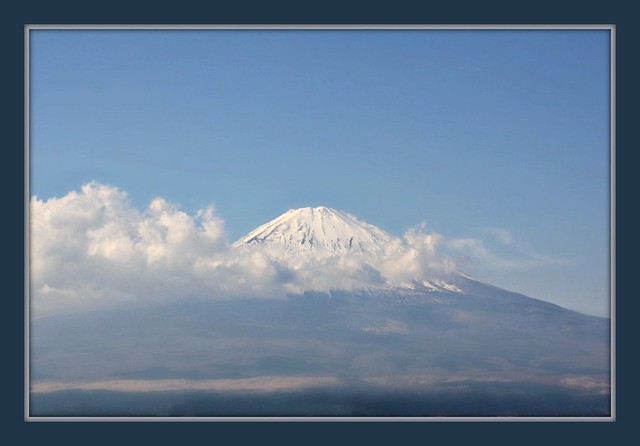
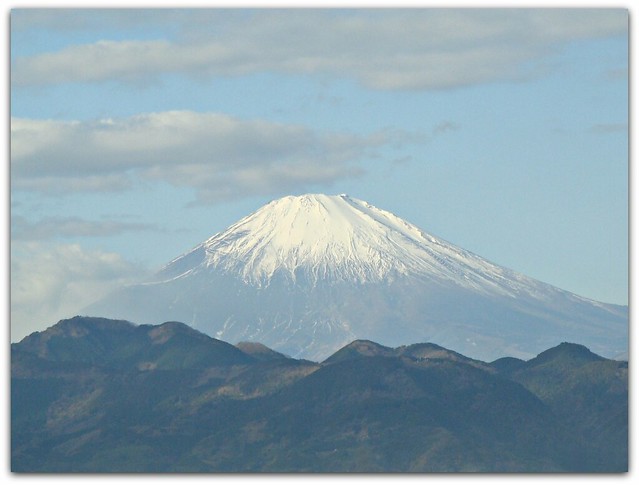
Views of Mt. Fuji (Japan)
Mt. Fuji has many different views... many different faces... This series of photos were taken while driving in a southern direction from Tokyo.

Things have changed so much in Japan. Even the Rest Areas along the Tomei Expressway have Starbucks at them. At this Starbucks, it means that you can order your favorite cup of coffee and enjoy watching Mt. Fuji while you enjoy drinking it!

However, just outside... you are able to admire Mt. Fuji. It is such a majestic mountain.

This is a lovely panoramic view of the areas around Mt. Fuji. It also shows the highway... such an interesting comparison of the history of Japan... Mt. Fuji is nestled amongst the toll highways...

While driving towards the North, Mt. Fuji appears mysterious. It is hidden by the clouds. Only a little part of the snowy base is visible.
There are many different mountains in Japan, but I enjoy watching Mt. Fuji.
more later...

Things have changed so much in Japan. Even the Rest Areas along the Tomei Expressway have Starbucks at them. At this Starbucks, it means that you can order your favorite cup of coffee and enjoy watching Mt. Fuji while you enjoy drinking it!

However, just outside... you are able to admire Mt. Fuji. It is such a majestic mountain.

This is a lovely panoramic view of the areas around Mt. Fuji. It also shows the highway... such an interesting comparison of the history of Japan... Mt. Fuji is nestled amongst the toll highways...

While driving towards the North, Mt. Fuji appears mysterious. It is hidden by the clouds. Only a little part of the snowy base is visible.
There are many different mountains in Japan, but I enjoy watching Mt. Fuji.
more later...
Sunday, December 10, 2006
blog links
I just found out that some of the links do not appear for everyone when they view this blog on their internet browser... so, I decided that I would publish the links as a blog to make it easier...

For more about me on blogspot.com... chris.ishikawa
For more about Japan on blogspot.com... martian.cat
For more about my travels on blogspot.com... visiting.places
For my blog on my.care2.com... Martian.cat's.blog

For some recipes on blogspot.com... Tea.for.Two
For translation of some food from English to Japanese on blogspot.com... food.names.from.English.to.Japanese
For my recipes on my.care2.com... Martian.cat's.recipes

flickr™ photo album... martian.cat.on.flickr.com
Fotoki™photo album... martian.cat.on.fotoki.com
Photobucket Inc. photo album... martian.cat.on.photobucket.com
My.care2.com photo album... martian.cat.on.my.care2.com

My.opera.com photo album... martian.cat

For networking on my.care2.com... Chris.Ishikawa
For networking on blogger.com... More.about.me...
For networking on Yahoo 360°... martian.cat.(aka).Chris.Ishikawa
For fun on myspace.com... martian.cat
For networking on Zoom.com... a.summary.of.Chris.Ishikawa

For more about Megumi on blogspot.com... Meg.the.cat
For more about Meg on myspace.com... Megumi
Meg is on Catster, too... *Megumi*
more later...

For more about me on blogspot.com... chris.ishikawa
For more about Japan on blogspot.com... martian.cat
For more about my travels on blogspot.com... visiting.places
For my blog on my.care2.com... Martian.cat's.blog

For some recipes on blogspot.com... Tea.for.Two
For translation of some food from English to Japanese on blogspot.com... food.names.from.English.to.Japanese
For my recipes on my.care2.com... Martian.cat's.recipes

flickr™ photo album... martian.cat.on.flickr.com
Fotoki™photo album... martian.cat.on.fotoki.com
Photobucket Inc. photo album... martian.cat.on.photobucket.com
My.care2.com photo album... martian.cat.on.my.care2.com
My.opera.com photo album... martian.cat

For networking on my.care2.com... Chris.Ishikawa
For networking on blogger.com... More.about.me...
For networking on Yahoo 360°... martian.cat.(aka).Chris.Ishikawa
For fun on myspace.com... martian.cat
For networking on Zoom.com... a.summary.of.Chris.Ishikawa

For more about Megumi on blogspot.com... Meg.the.cat
For more about Meg on myspace.com... Megumi
Meg is on Catster, too... *Megumi*
more later...
Friday, November 24, 2006
Picking Mandarin oranges (mikans)
This area is a little warmer and right now, there are colored leaves in the outskirts of the Tokyo (Japan) area. This is the season for picking Mandarin oranges (or mikan in Japanese).
On November 17, 2006, Kanagawa International Association's Minami Circle had their outing trip. Earlier in the day, we visited a lantern artist's residence and gallery in Yokosuka. It was planned that we would be going to an orchard to pick Mandrin oranges after enjoying lunch.
The weather cooperated with some sunny skies and we were able to enjoy the beginning of the colored leaves in the area.

We visited an orchard in the Tukurihama-Kanko-Noen area of the Miura Peninsula by tour bus.

The trees were beautiful. There were so many delicious fruit ready to be picked.

In order to pick the fruit, clippers are needed. Using these clippers avoids tearing the delicate flesh of the mikans.


As I was leaving, I noticed that there was a schedule, which shows when the crops are ready for harvesting. The one that interested me the most was strawberries... they can be picked from January to May.

This makes me think that I'll be back to during that season because I love delicious strawberries.
more later...
On November 17, 2006, Kanagawa International Association's Minami Circle had their outing trip. Earlier in the day, we visited a lantern artist's residence and gallery in Yokosuka. It was planned that we would be going to an orchard to pick Mandrin oranges after enjoying lunch.
The weather cooperated with some sunny skies and we were able to enjoy the beginning of the colored leaves in the area.

We visited an orchard in the Tukurihama-Kanko-Noen area of the Miura Peninsula by tour bus.

The trees were beautiful. There were so many delicious fruit ready to be picked.

In order to pick the fruit, clippers are needed. Using these clippers avoids tearing the delicate flesh of the mikans.


As I was leaving, I noticed that there was a schedule, which shows when the crops are ready for harvesting. The one that interested me the most was strawberries... they can be picked from January to May.

This makes me think that I'll be back to during that season because I love delicious strawberries.
more later...
Thursday, November 02, 2006
Tateyama Area in the Bosco Peninsula Area of Chiba Prefecture (Japan)
Located in tip of the southern part of Chiba's Boso Peninsula is the Tateyama area. This is a very mountainous region.
This area of Japan is rich in history with many historical symbols.
There is a 50 meter Kannon which is a Goddess of Mercy. The first photo describes the height in Japanese.

This Kannon has been designated as a National Natural Monument. This photo shows the Goddess.

From the road, you can see the stone figure of Buddha at Nihon-ji Temple in the Town of Kyonan. It is carved into the mountainside.

The largest reclining Buddha in Asia is located on a mountainside.

Tateyama Castle is a very well known landmark. It was originally constructed in 1590 by a Samurai warrior whose name is Satomi Yoshiyasu. This structure was reconstructed in 1982. It is worth the visit to the top because the views are lovely.

The Boso Peninsula area is easily accessible by car and train from the Tokyo/Yokohama areas.
more later...
This area of Japan is rich in history with many historical symbols.
There is a 50 meter Kannon which is a Goddess of Mercy. The first photo describes the height in Japanese.

This Kannon has been designated as a National Natural Monument. This photo shows the Goddess.

From the road, you can see the stone figure of Buddha at Nihon-ji Temple in the Town of Kyonan. It is carved into the mountainside.

The largest reclining Buddha in Asia is located on a mountainside.

Tateyama Castle is a very well known landmark. It was originally constructed in 1590 by a Samurai warrior whose name is Satomi Yoshiyasu. This structure was reconstructed in 1982. It is worth the visit to the top because the views are lovely.

The Boso Peninsula area is easily accessible by car and train from the Tokyo/Yokohama areas.
more later...
The Tokyo Aqua-Line - Tokyo Bay's Tunnel/Bridge
A tunnel was made under the Tokyo Bay from Kawasaki City to Kisarazu in Chiba Prefecture.
This is the map that shows the route of the Aqua-Line - Tokyo Bay Tunnel/Bridge.

Because of the distance, there is an observation area at a mid-point.

It is amazing the view of the area. This is looking back towards the Yokohama Bay Bridge from the observation area.

more later...
This is the map that shows the route of the Aqua-Line - Tokyo Bay Tunnel/Bridge.

Because of the distance, there is an observation area at a mid-point.

It is amazing the view of the area. This is looking back towards the Yokohama Bay Bridge from the observation area.

more later...
Monday, September 18, 2006
Yokohama Bayside Marina... an Outlet Mall with a theme (Japan)
Located along the Seaside Line in Yokohama is a unique outlet mall. The theme of Yokohama Bayside Marina is a yacht harbor. It gives the ambiance of being at Nantucket even though this wharf is located in an industrial area of Yokohama.
The idea of looking at numerous boats in the harbor gives you the feeling that you have left the bustle of a busy city. It is nestled with container loading docks, but your attention is drawn to the atmosphere of the harbor. There are areas where you can enjoy an outside meal at a restaurant.
The boats are privately owned. There are yachts going in and out of the marina every day. It is not a museum... even though you might imagine this because there are boats floating at their berths.
This outlet mall provides with a large variety of stores that will satisfy your day's shopping. There are numerous clothing and furnishing stores. You can purchase numerous types of boating and sailing equipment, too. After all, every yacht harbor should have these stores, too!
Imagine having a chance to enjoy a day here. There is ample parking for those who prefer to drive. I find that it is very relaxing to just sit with a cup of tea after my shopping is completed and watch the boats floating in a harbor...a favorite pastime. It is one of my favorite places to get away for a day of retail therapy and relaxation.
...more later
The idea of looking at numerous boats in the harbor gives you the feeling that you have left the bustle of a busy city. It is nestled with container loading docks, but your attention is drawn to the atmosphere of the harbor. There are areas where you can enjoy an outside meal at a restaurant.
The boats are privately owned. There are yachts going in and out of the marina every day. It is not a museum... even though you might imagine this because there are boats floating at their berths.
This outlet mall provides with a large variety of stores that will satisfy your day's shopping. There are numerous clothing and furnishing stores. You can purchase numerous types of boating and sailing equipment, too. After all, every yacht harbor should have these stores, too!
Imagine having a chance to enjoy a day here. There is ample parking for those who prefer to drive. I find that it is very relaxing to just sit with a cup of tea after my shopping is completed and watch the boats floating in a harbor...a favorite pastime. It is one of my favorite places to get away for a day of retail therapy and relaxation.
...more later
Thursday, September 14, 2006
My visit to Mikimoto Pearl Island Co., Ltd (Japan)
In November of last year, I had the opportunity to visit Mikimoto Pearl Island Co., Ltd in Toba, Mie Prefecture. I was able to walk around and rediscover the beauty of pearls. I say rediscover because I had visited this area several years earlier.

When I hear the word Mikimoto™, I immediately think of lovely round cultured pearls. I think that pearls are such a beautiful part of nature.

At Mikimoto Pearl Island, there are women divers, who in Japanese are called Ama. The costume the Ama wear is white. They do a demonstration about how they dive for the pearls at different times during the day.

On the day that I was there, the weather was sunny and I was able to take a couple memorable photos of the diving demonstration. The Ama’s characteristic behavior is to whistle into the wooden floating tub after each dive.

A visit to the museum did complete my day’s visit. Of course, I was able to enjoy some pearl shopping, too.
Now, I can only hope and dream that someday I will be another chance to return for another visit.
more later...

When I hear the word Mikimoto™, I immediately think of lovely round cultured pearls. I think that pearls are such a beautiful part of nature.

At Mikimoto Pearl Island, there are women divers, who in Japanese are called Ama. The costume the Ama wear is white. They do a demonstration about how they dive for the pearls at different times during the day.

On the day that I was there, the weather was sunny and I was able to take a couple memorable photos of the diving demonstration. The Ama’s characteristic behavior is to whistle into the wooden floating tub after each dive.

A visit to the museum did complete my day’s visit. Of course, I was able to enjoy some pearl shopping, too.
Now, I can only hope and dream that someday I will be another chance to return for another visit.
more later...
Sunday, September 10, 2006
Himeji Castle (Japan)
One place in Japan that I had always wanted to visit was Himeji Castle (or in Japanese Himeji-jo and alternately known as Shirasagi-jo, the White Heron Castle). This castle is located in Himeji City in Hyogo Prefecture and is a little over one hour by train from Kobe. This feudal age Castle is easily accessible from the train station.
Himeji-jo is a Japanese National Treasure Site. It became one of the World Cultural Heritage Sites in the 1990's. Imagine... this structure was constructed as a fort in the 1400's and rebuilt in the 1600's as a castle.

My father was in Japan with the Occupation Forces as a U.S. Military Police from 1946-48 in the Kansai Area (Osaka, Kobe, Kyoto, Nara, Lake Biwa). During my childhood, he shared his stories of visiting many places in that region of Japan.
One of the places he often talked about was Himeji-jo. I think that one of the reasons it was such a memory to him was because it was never destroyed during WWII. The pilots thought that it was just an untamed area because of the water and the area looked very overgrown. So, it was preserved, not destroyed.
To my father, it must have looked majestic at that time as Japan was recovering from so much war damage. He often talked about the structure being built of wood.. without any nails to hold the structure together. He often encouraged me to visit Himeji-jo when we chatted together on the phone.

In July, I had the opportunity to visit Himeji Castle. One of my dreams came true. I met a friend and we hired a Silver Guide. In Japanese, he described the history of Himeji-jo. The Guide's stories were fascinating as we walked around the area.
Uniquely, the castle's stones came from many different places. Some stones are even from tombs. As we walked around, my mind began to think of how much smaller the workers were at that time. I just could not imagine how many people it took to move the massive stones into place at the bottom of the structure before the building was built.
It is five levels and has one floor below that really makes it six stories. There are some gates built for defense that actually confused many enemies. The walls of the original fortress were built in the 1500's are still visible. Also, you could imagine that the location was ideal. As we climbed the stairs from floor to floor looking out of the fortress, there were magnificent views of the coastline. It seems amazing that such a large structure has survived earthquakes.
The reason for the nickname, Shirasagi-jo, is because the secured tower or the keep in the early structure resembles a white heron.
This is one area that I would enjoy revisiting. I love Japanese architecture and its history.
more later...
Himeji-jo is a Japanese National Treasure Site. It became one of the World Cultural Heritage Sites in the 1990's. Imagine... this structure was constructed as a fort in the 1400's and rebuilt in the 1600's as a castle.

My father was in Japan with the Occupation Forces as a U.S. Military Police from 1946-48 in the Kansai Area (Osaka, Kobe, Kyoto, Nara, Lake Biwa). During my childhood, he shared his stories of visiting many places in that region of Japan.
One of the places he often talked about was Himeji-jo. I think that one of the reasons it was such a memory to him was because it was never destroyed during WWII. The pilots thought that it was just an untamed area because of the water and the area looked very overgrown. So, it was preserved, not destroyed.
To my father, it must have looked majestic at that time as Japan was recovering from so much war damage. He often talked about the structure being built of wood.. without any nails to hold the structure together. He often encouraged me to visit Himeji-jo when we chatted together on the phone.

In July, I had the opportunity to visit Himeji Castle. One of my dreams came true. I met a friend and we hired a Silver Guide. In Japanese, he described the history of Himeji-jo. The Guide's stories were fascinating as we walked around the area.
Uniquely, the castle's stones came from many different places. Some stones are even from tombs. As we walked around, my mind began to think of how much smaller the workers were at that time. I just could not imagine how many people it took to move the massive stones into place at the bottom of the structure before the building was built.
It is five levels and has one floor below that really makes it six stories. There are some gates built for defense that actually confused many enemies. The walls of the original fortress were built in the 1500's are still visible. Also, you could imagine that the location was ideal. As we climbed the stairs from floor to floor looking out of the fortress, there were magnificent views of the coastline. It seems amazing that such a large structure has survived earthquakes.
The reason for the nickname, Shirasagi-jo, is because the secured tower or the keep in the early structure resembles a white heron.
This is one area that I would enjoy revisiting. I love Japanese architecture and its history.
more later...
Monday, September 04, 2006
Sankeien Garden in Yokohama (Japan)
Sankeien Garden is a lovely place to enjoy for visit. There are places where you can imagine women performing the Japanese Tea Ceremony to guests in the ancient tearooms. These buildings are located in the Inner Gardens.

Sankeien Garden is a place where you can enjoy a moment looking at buildings displaying an architecture that is no longer built.

There are many lovely sights in a panoramic views across the small lake. Remember to bring along some stale bread to feed the colorful carp.

The gardens at Sankeien change with the seasons and you should visit it at least four times a year to appreciate the flowers and trees.

If you are lucky, you can find a place to enjoy a quiet moment.
more later...

Sankeien Garden is a place where you can enjoy a moment looking at buildings displaying an architecture that is no longer built.

There are many lovely sights in a panoramic views across the small lake. Remember to bring along some stale bread to feed the colorful carp.

The gardens at Sankeien change with the seasons and you should visit it at least four times a year to appreciate the flowers and trees.

If you are lucky, you can find a place to enjoy a quiet moment.
more later...